
Detailed Parameters of Joints in Each Series:
WHJ30 Series Specifications Model: WHJ30_S_D60_80_B
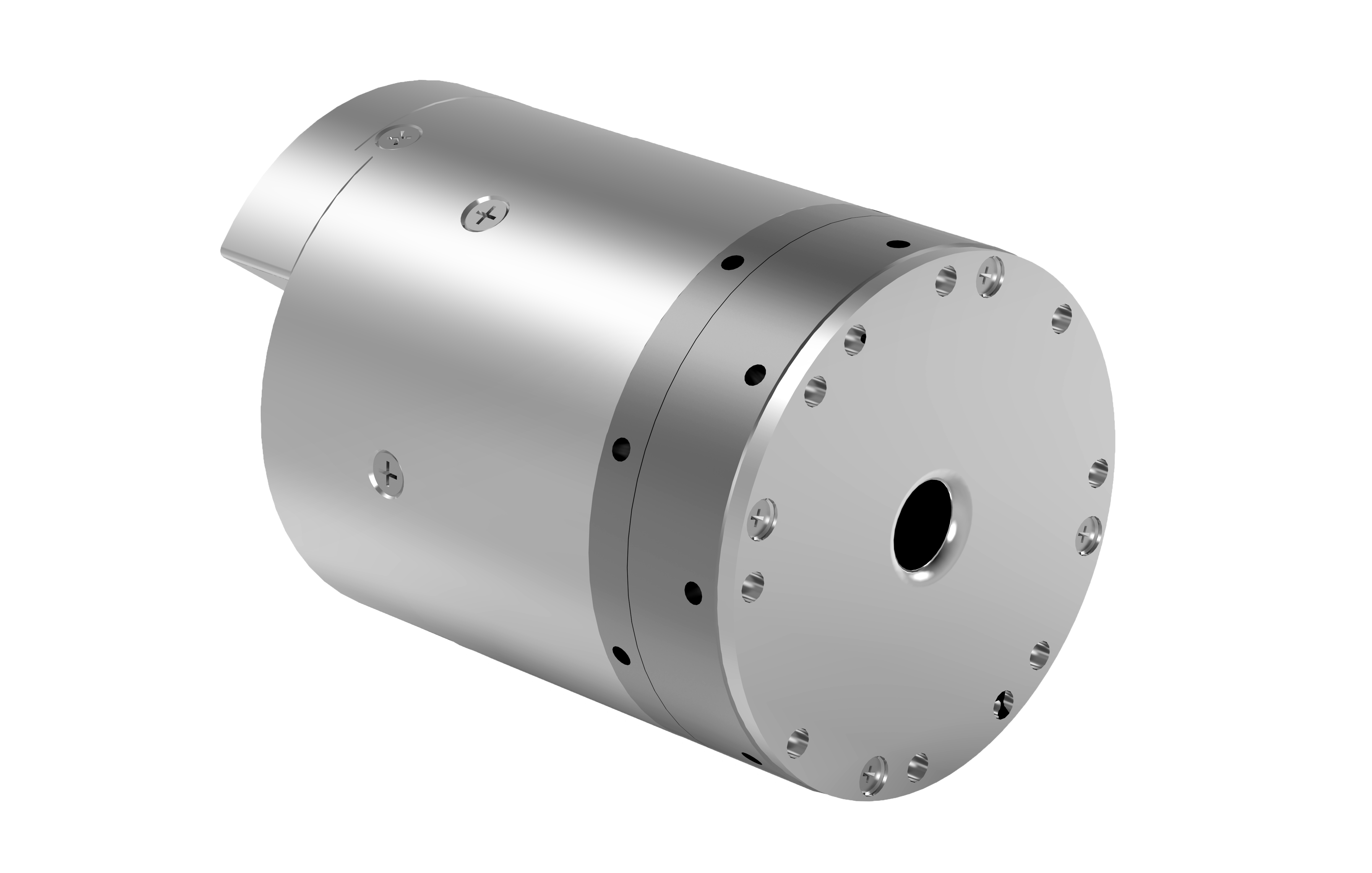
Illustration
Performance parameters
| Parameter | Value |
|---|---|
| Reduction ratio | 80 |
| Weight | 750 g |
| Diameter of reducer mm | 60 |
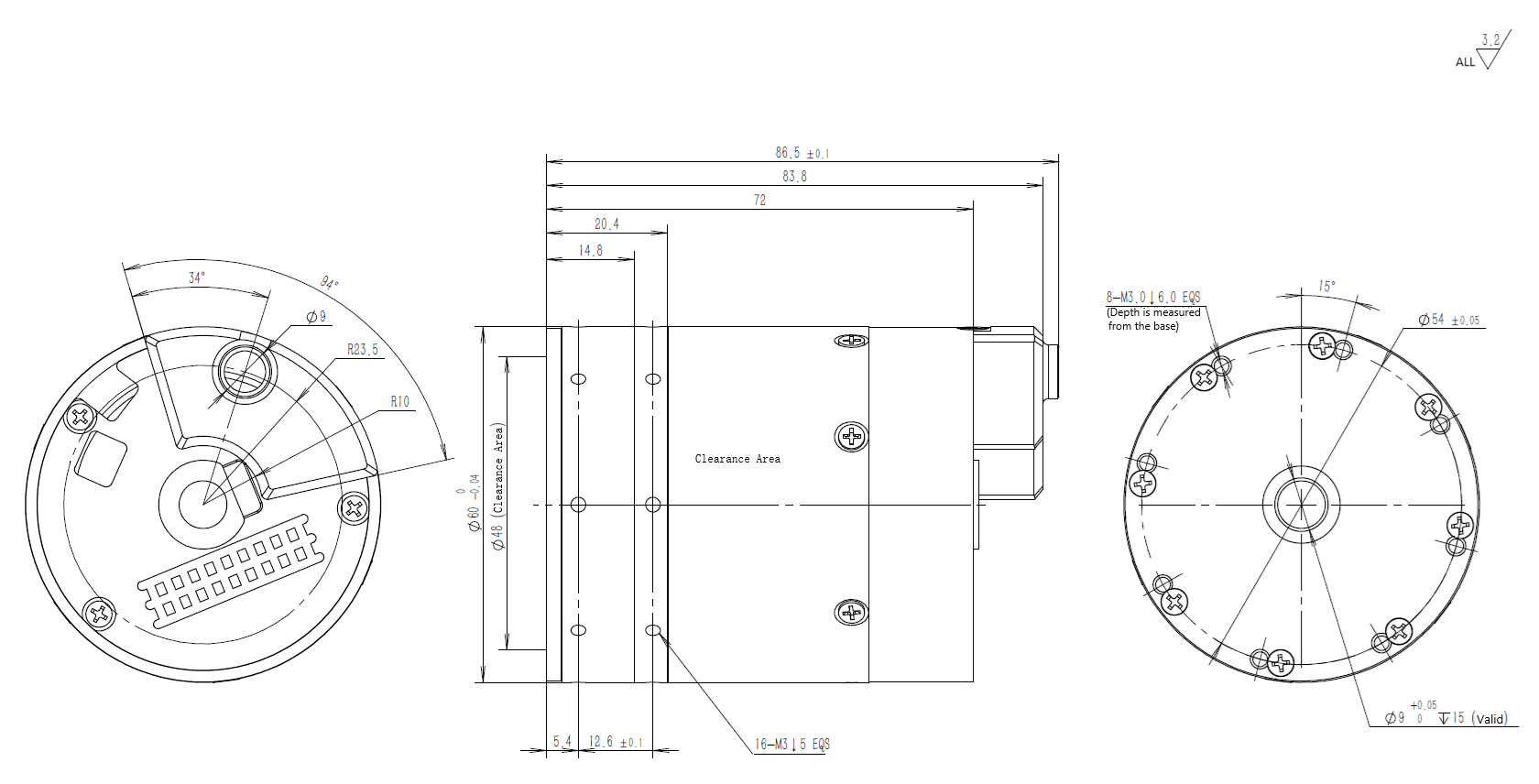
| Size (D × L mm) | 60 * 86.5 |
| Rated torque N.m | 30 |
| Maximum torque density | 123 |
| Repeatability | ±15 arc-seconds |
| Peak speed (RPM) | 37.5 (24V) / 75 (48V) |
| Moment of inertia (kg*m^2) | 2.98*10^-5 |
| Hollow aperture | 9 mm |
| Working temperature | 0 to 50°C |
| Rated power | 137 W |
| Rated voltage | 24 V / 48 V |
| Rated current | 5.7 A (24 V) / 2.8 A (48 V) |
| Type of brake | Latch brake |
| Incremental encoder | 16 bits |
| Absolute position encoder | 18 bits |
| Communication interface | CANFD |
| Examples of scenarios | Robotic arm, surgical robot, and elbow joint, ankle joint, neck joint and shoulder joint of humanoid robot, etc. |
When operating under high loads and high speeds, the joint module generates regenerative braking energy. An external "Power Discharge Module" (see Power Bleeding Module) is required to prevent errors and shutdowns due to excessive bus voltage caused by regenerative energy feedback leading to a surge in the power supply voltage.
Detailed dimensions